
Honoring Women’s History Month: The Evolving Role of Women in Disability Support
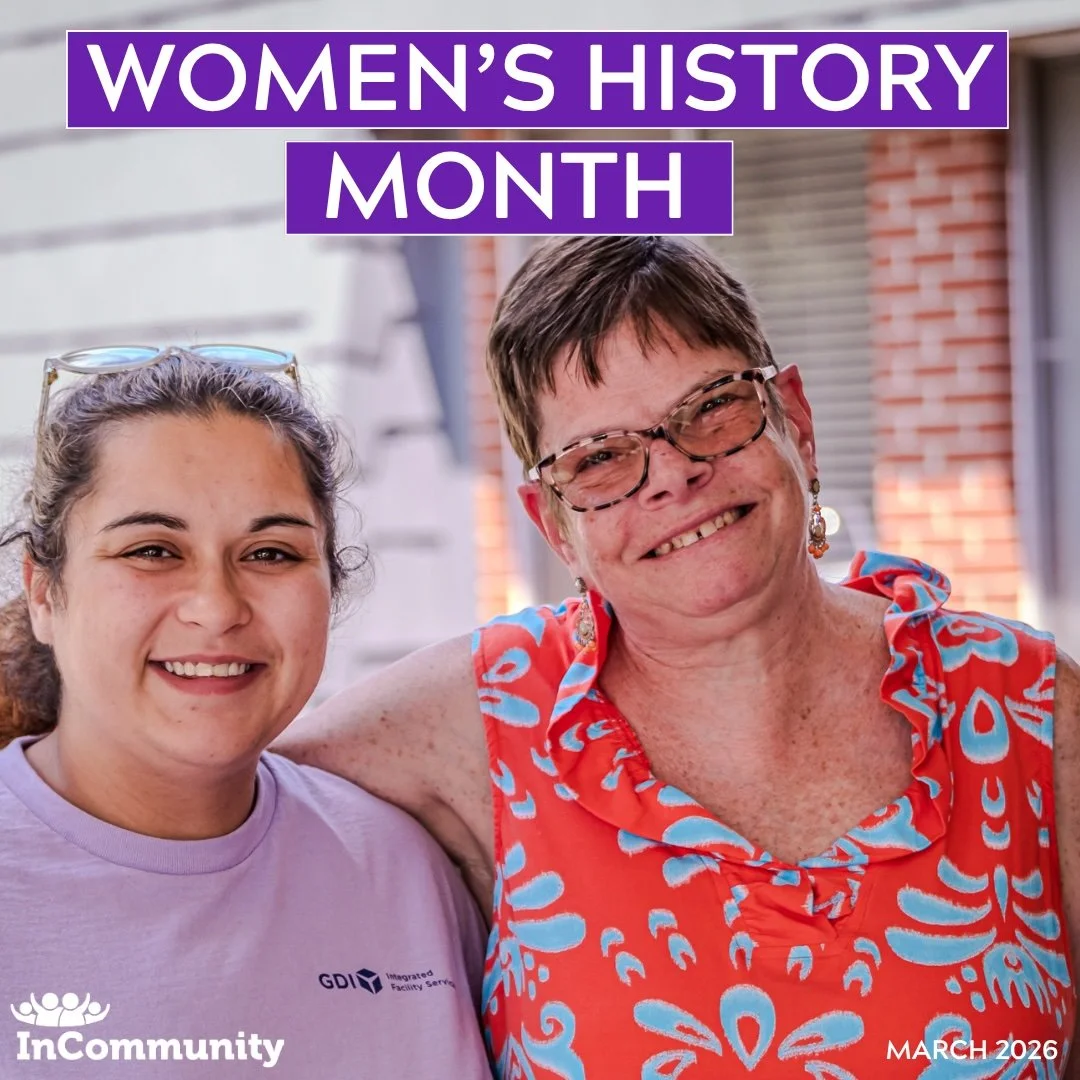
Women have long played a vital role in shaping the systems of care, advocacy, and inclusion that support individuals with intellectual and developmental disabilities (I/DD). From caregiving within families to leading nonprofit organizations, women have helped transform disability support from a model of isolation to one rooted in dignity, community, and belonging.
As we celebrate Women’s History Month, InCommunity reflects on how the role of women in disability support has evolved, and how that evolution continues to shape stronger, more inclusive communities today.
From Caregiving to Community Leadership
Historically, women often carried the primary responsibility for caregiving within families. Mothers, sisters, and grandmothers advocated tirelessly for loved ones with disabilities at a time when resources were limited and community-based support was not widely available.
Over time, those personal efforts grew into broader advocacy movements. Women organized, raised awareness, and pushed for better access to education, healthcare, housing, and employment. Their commitment helped shift the conversation from institutional care to community inclusion — from “placement” to partnership.
That same spirit of advocacy and determination is deeply rooted in InCommunity’s history.
In 2024, InCommunity proudly celebrated 45 years of service, advocacy, and impact. Since 1979, the organization has worked alongside individuals with intellectual and developmental disabilities and their families to build lives of choice, connection, and belonging in communities across Georgia.
A Legacy Carried Forward Through Women’s Voices
To mark this milestone, CEO Meg Blackwood led an insightful conversation with two extraordinary women who embody the heart of InCommunity — a powerful reflection of how women have shaped and sustained the organization across generations.
Abbie B., the daughter of Katherine “Kay” B., one of InCommunity’s original founders, shared her unique perspective as one of the first individuals supported by the organization. Her story reflects the vision and determination of the families, many led by women, who helped establish InCommunity and advocate for a more inclusive future.
Marva Edwards, who began her career as a Direct Support Professional (DSP), now serves as InCommunity’s Communications Manager. Her journey represents the evolution of professional pathways within disability support, highlighting how women continue to grow, lead, and shape the future of the field.
Together, their reflections highlight where InCommunity began, how it has evolved over 45 years, and the values that continue to guide the organization today.
Watch the full conversation below.
Shifting Toward Person-Centered Support
The evolution of disability services has also meant a shift in philosophy. Where support once centered on managing needs, it now prioritizes empowering individuals to live safe, healthy, and joyful lives within their communities.
Women have played a significant role in advancing person-centered care models — approaches that emphasize:
Choice and autonomy
Dignity and respect
Meaningful employment
Community engagement
Self-advocacy
This shift reflects a broader understanding that disability support is not simply about services — it is about opportunity, belonging, and quality of life.
Leadership at Every Level
Today, women contribute to disability support at every level — from direct care to executive leadership.
At InCommunity, this is reflected in the many women who serve as:
Direct Support Professionals
Program leaders
Nurses and care coordinators
Administrative and communications professionals
Organizational leadership
Their work extends beyond daily responsibilities. Women across the organization bring compassion, expertise, and innovation to their roles — helping individuals with I/DD live fulfilling lives while strengthening the broader community.
The journey from caregiver to leadership, like Marva Edwards’ story, is just one example of how women continue to shape not only individual lives, but the direction of the entire organization.
Advocacy That Continues Today
While significant progress has been made, the work of inclusion continues. Women remain at the forefront of:
Family advocacy
Workforce development
Expanding access to services
Advancing health equity
Strengthening community partnerships
Their leadership reinforces the understanding that disability inclusion is not a moment in time — it is an ongoing commitment.
Rooted in Community, Driven by Women
The evolving role of women in disability support mirrors the evolution of InCommunity itself. What began as grassroots advocacy, often led by determined mothers and families, has grown into a comprehensive network of services grounded in respect, equity, and belonging.
This Women’s History Month, we honor the women — past and present, who continue to shape InCommunity’s mission. From founders and family advocates to caregivers, professionals, and leaders, their impact is woven into every part of the organization.
Because when women lead with purpose and compassion, they don’t just support individuals — they build stronger, more inclusive communities for all.