Saying Hello to New Destinations: Why Mobility Matters for Independence, Inclusion, and Community
Every journey begins with access.
For many people, mobility is something they rarely have to think about. Getting to work, attending a doctor’s appointment, visiting friends, going shopping, or participating in community events are often routine parts of daily life. But for individuals with disabilities and other mobility challenges, these everyday activities can depend entirely on whether transportation, public spaces, and community environments are accessible and inclusive.
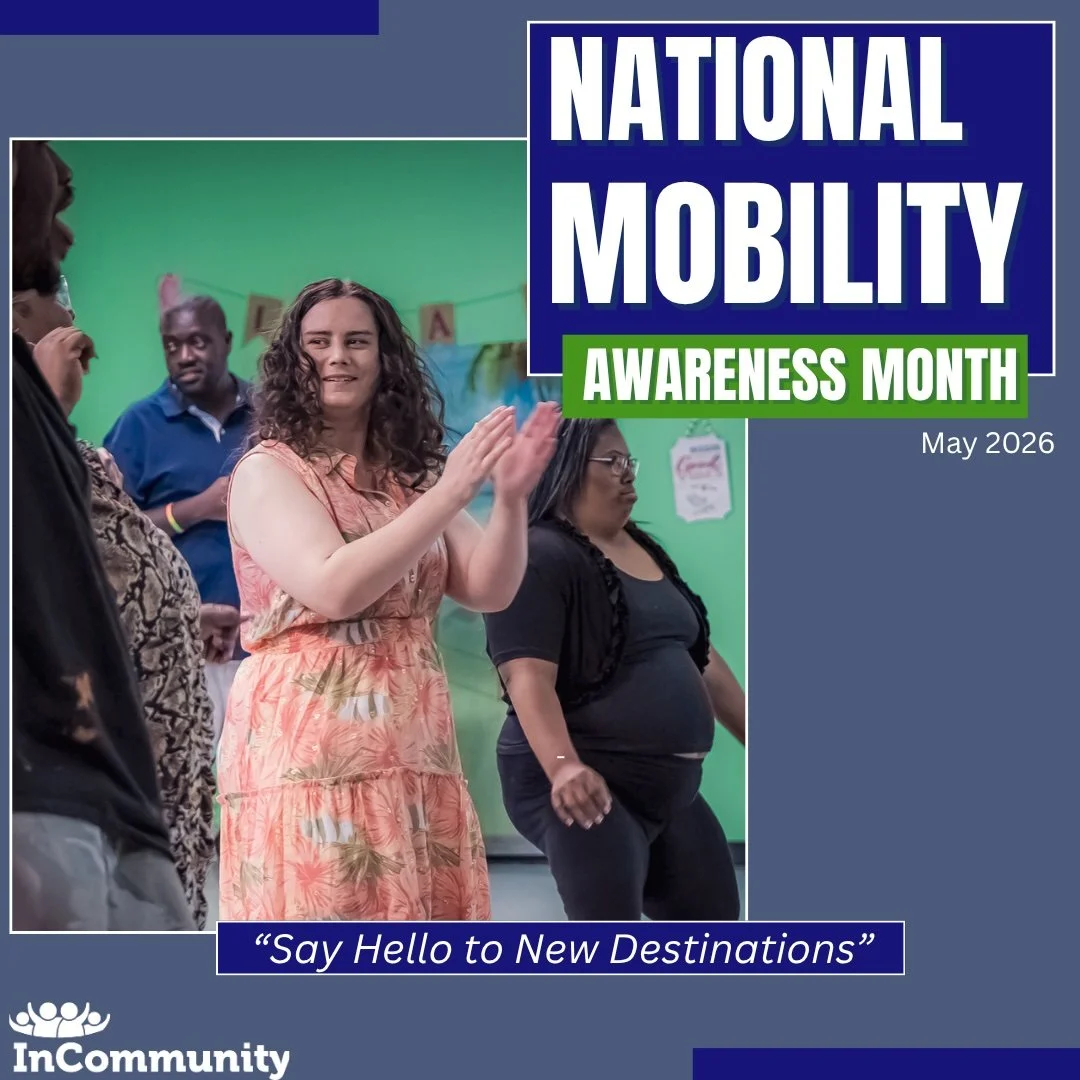
That is why National Mobility Awareness Month is so important.
This year’s theme, “Say Hello to New Destinations,” encourages all of us to think beyond transportation alone and consider what mobility truly represents. Mobility is freedom. It is independence. It is opportunity. It is connection. And perhaps most importantly, mobility allows people to fully participate in the communities where they live, work, and belong.
At InCommunity, we believe accessibility is not an extra feature or an afterthought. It is a foundation for inclusion and quality of life.
Mobility Creates Independence
Independence looks different for everyone. For some, it may mean driving to work independently for the first time. For others, it may mean safely navigating a sidewalk, accessing public transportation, or entering a building without barriers.
Accessible transportation and adaptive environments give individuals the ability to make choices about their own lives. They reduce isolation and increase confidence. They allow people to engage in education, employment, healthcare, recreation, and social opportunities that many others may take for granted.
Mobility also supports dignity. When individuals can move through the world safely and independently, they gain greater control over their schedules, goals, relationships, and routines. That autonomy has a powerful impact on mental health, emotional well-being, and overall quality of life.
True inclusion begins when communities recognize that accessibility benefits everyone.
Accessibility Strengthens Communities
An accessible community is a stronger community.
When transportation systems, sidewalks, parks, businesses, and public spaces are designed with inclusion in mind, more people can participate fully in everyday life. Families can attend events together. Individuals can maintain employment and social connections. Older adults can remain active and engaged. People with disabilities can pursue opportunities without unnecessary obstacles standing in their way.
Accessibility is not only about compliance. It is about creating environments where people feel welcomed, respected, and valued.
Something as simple as a curb cut, automatic door, accessible parking space, or adaptive transportation option can completely change someone’s ability to participate in the world around them. Inclusive design helps communities become more connected, compassionate, and equitable for everyone.
As we continue to grow and evolve as communities, accessibility must remain part of the conversation from the very beginning, not added later as an adjustment.
Transportation Is About More Than Getting Somewhere
Transportation is often viewed as a logistical issue, but for many individuals, it is deeply personal.
Reliable and accessible transportation can determine whether someone is able to maintain employment, attend medical appointments, participate in community activities, or maintain relationships with family and friends. Without it, isolation can quickly become a reality.
Adaptive transportation services, accessible ride options, and inclusive public transit systems help create pathways to opportunity. They provide more than movement. They provide access to experiences, independence, and belonging.
When mobility barriers are removed, people are empowered to pursue goals, explore interests, and say yes to opportunities that may have once felt out of reach.
That is the heart of this year’s theme: “Say Hello to New Destinations.”
Those destinations are not always physical places. Sometimes they are new experiences, greater confidence, stronger relationships, meaningful employment, or deeper community involvement.
Inclusion Requires Ongoing Commitment
While progress has been made in accessibility and mobility awareness, there is still work to do.
Communities, organizations, businesses, and leaders all play a role in creating environments that are truly inclusive. That means listening to individuals with lived experience, investing in accessible infrastructure, supporting adaptive technologies, and prioritizing transportation solutions that serve everyone.
It also means changing the way we think about accessibility. Inclusion should not be viewed as serving a small group of people. Accessible environments improve experiences for parents with strollers, older adults, veterans, individuals recovering from injuries, and countless others.
When we design communities with accessibility in mind, everyone benefits.
At InCommunity, we remain committed to advocating for inclusion, supporting accessibility, and helping create opportunities for individuals to live more connected and independent lives.
Looking Ahead
National Mobility Awareness Month is an opportunity to celebrate progress, raise awareness, and continue important conversations about accessibility and inclusion.
This month, we encourage everyone to reflect on the ways mobility impacts everyday life and to consider how we can continue building communities where every person can participate fully and independently.
Because mobility is more than transportation.
It is freedom to move through the world with confidence.
It is access to opportunity.
It is connection to community.
And it is the ability to say hello to new destinations, wherever they may lead.